
Auction 98 · Lot 99
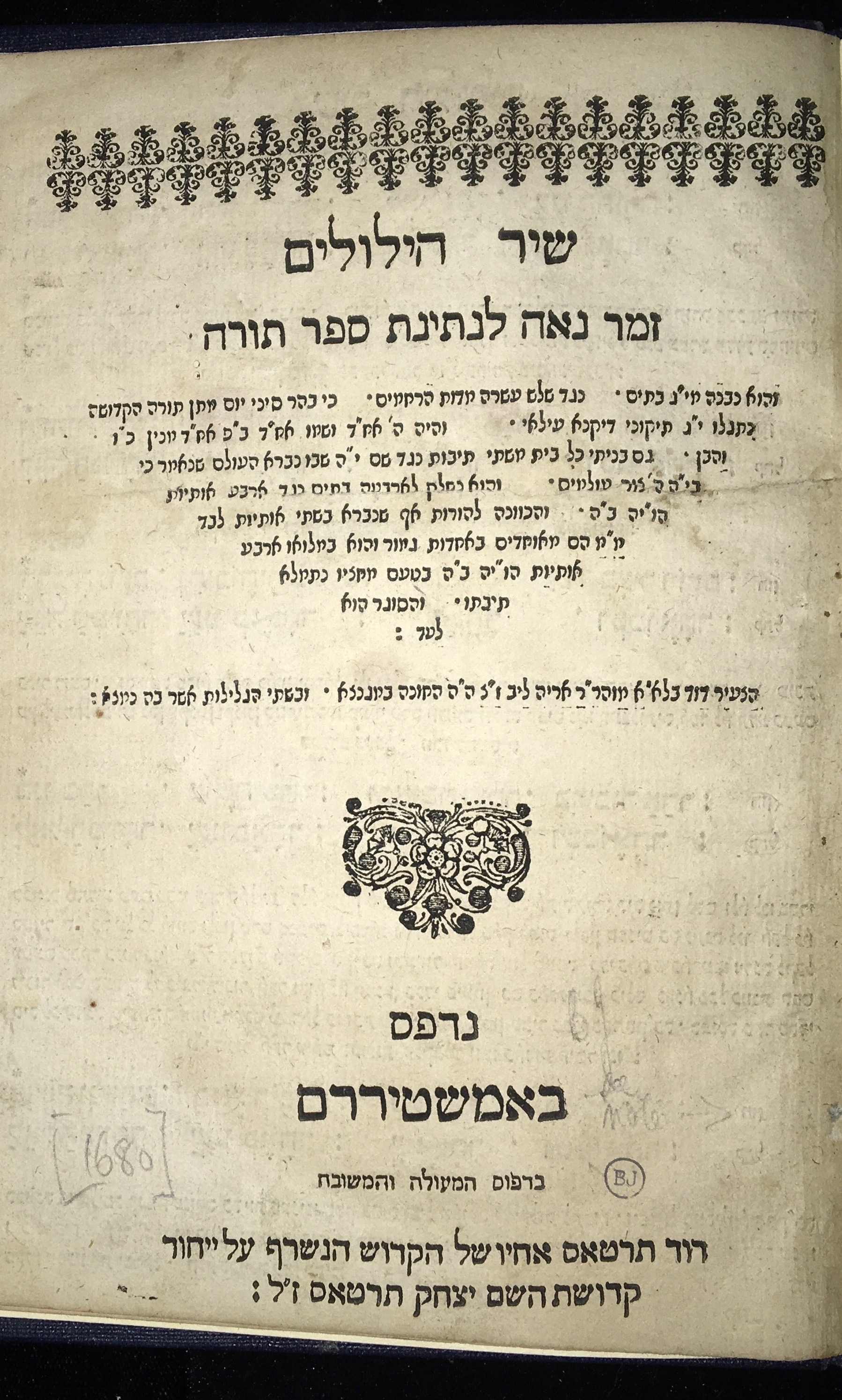
Lida, David. Shir Hilulim.
- Estimate
- $2,000–$3,000
- Hammer price
- Not recorded
Historical auction record. Hammer prices exclude buyer’s premium and taxes.
author
(BRAZIL).
printer
David (de Castro) Tartas
Place
Amsterdam
Publication
-1680
Description
Formerly in the collection of the late JJ Reich (Manchester).
references
Vinograd, Amsterdam 460; Fuks, Amsterdam no.472 and see p.340
summary
A rare 4-page poem in honor of the dedication of a new Torah Scroll. The first letter of each verse provides the name of the author: David ben M[oreinu] Leib ZaTZa”L, the Chief Rabbi of Amsterdam’s Aschkenazi Congregation.
The printer Tartas memorializes here the name of his brother Isaac, who was burned at the stake during an Auto-da-fé.
Isaac Tartas emigrated to Recife in Dutch Brazil in 1641. In 1644, he relocated to Bahia, which was under Portuguese jurisdiction. There, he was seized as a Judaizer and sent to Lisbon to be tried by the Inquisition. After a lengthy trial, in which Isaac steadfastly refused to abjure his Jewish faith, he was executed. This resulted in diplomatic exchanges between the Dutch and Portuguese Governments on behalf of other Jewish captives in Brazil who originated from regions under Dutch sovereignty. See A. Wiznitzer, Isaac de Castro A Brazilian Jewish Martyr in: The Jewish Experience in America (1971) Vol. II pp.205-17.
The last page of the poem records the name of the compositor: Jacob Haim ben Moses Raphael de Cordova of Brazil. A year later in 1681- and known simply as Jacob de Cordovera - he printed Rabbi Isaac Aboab da Fonseca’s Parafrasis Commentada sobre el Pentateucho (see Lot 5). See R. Weinstein, “Stones of Memory” in: American Jewish Archives Vol. XLIV (1992) pp. 106-7.
Rabbi Jacob Emden presupposed that Lida had been a secret adherent of Shabtai Tzvi, the pseudo-Messiah of Izmir. How else to account for Lida’s anomalous remark at the conclusion of the Shir: “Tishbi Yigaleinu” (Tishbi will redeem us)? Normally, it is the Messiah son of David who is portrayed as the final Redeemer, not Elijah the Tishbite. According to Emden, “Tishbi” is none other than “Shabtai” by the process of metathesis. See B. Naor, Post-Sabbatian Sabbatianism (1999) pp.38-9.
pp. (4). Touch stained. Recent boards. 4to.