
Auction 29 · Lot 83
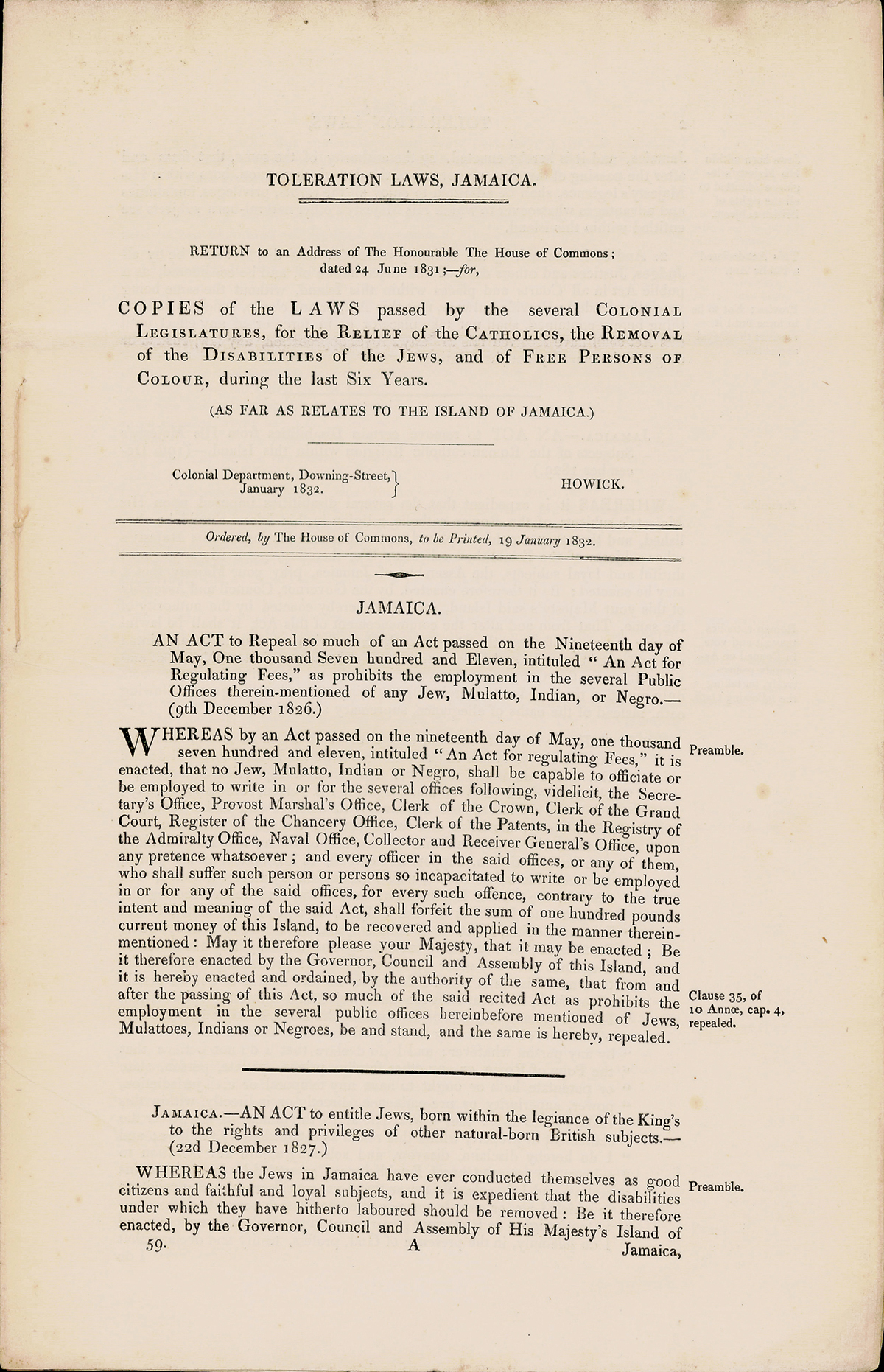
(Parliamentary Act, Jamaican). Toleration Laws
- Estimate
- $5,000–$7,000
- Hammer price
- $11,000
Historical auction record. Hammer prices exclude buyer’s premium and taxes.
author
(AMERICAN JUDAICA)
Place
London
Publication
1832
references
Not in Roth, Magna Bibliotheca Anglo-Judaica
summary
Contains six laws passed by the Jamaican legislature from 1826 to 1830 expanding the rights of the Island’s Jews, Catholics, Indians and Blacks.
Two laws deal exclusively with the Jewish community. The first (1827) was “an act to entitle Jews, born within the legiance of the king’s, to the rights and privileges of other natural-born British subjects”: “whereas the Jews in Jamaica have ever conducted themselves as good citizens and faithful loyal subjects . . . it is expedient that disabilities under which they have hitherto laboured should be removed.”
The second act (1830) repealed an earlier law that limited the right to vote and hold office in Kingston to professing Christians: “whereas doubts have been entertained whether persons professing the Jewish Religion are entitled to exercise and enjoy the same rights, privileges and immunities and advantages to which His Majesty’s other natural-born subjects are entitled within this Island . . . Such doubts ought no longer to exist."
A third act (1826) repealed a law passed in 1711, that had prohibited members of the above-mentioned minorities from working as civil servants and had been interpreted so as to exclude Jews from the bar.
Despite that fact that many Jamaican Jews were naturalized under the provisions of a 1739 act passed by the English Parliament (see previous Lot), the Jamaican Jews continued to face various restrictions owing to the antipathy of the local legislature. Its members belonged to the merchant middle class and they sought to use their political influence to stifle Jewish competition.
The acts of 1826-1830 marked a new era in the history of Jamaican Jews, and they quickly became prominent in public life. Indeed, the first Jew was elected to the Jamaican assembly in 1835; eighteen years later, the Assembly adjourned for Yom Kippur because one sixth of members were Jewish (including the Speaker of the House).
See Marcus, The Colonial American Jew, Vol. I, pp. 101-113; Andare, A Record of the Jews of Jamaica, pp. 15-37
pp. 10, [1]. Folds. Unbound. 4to
Enquire about this lot