
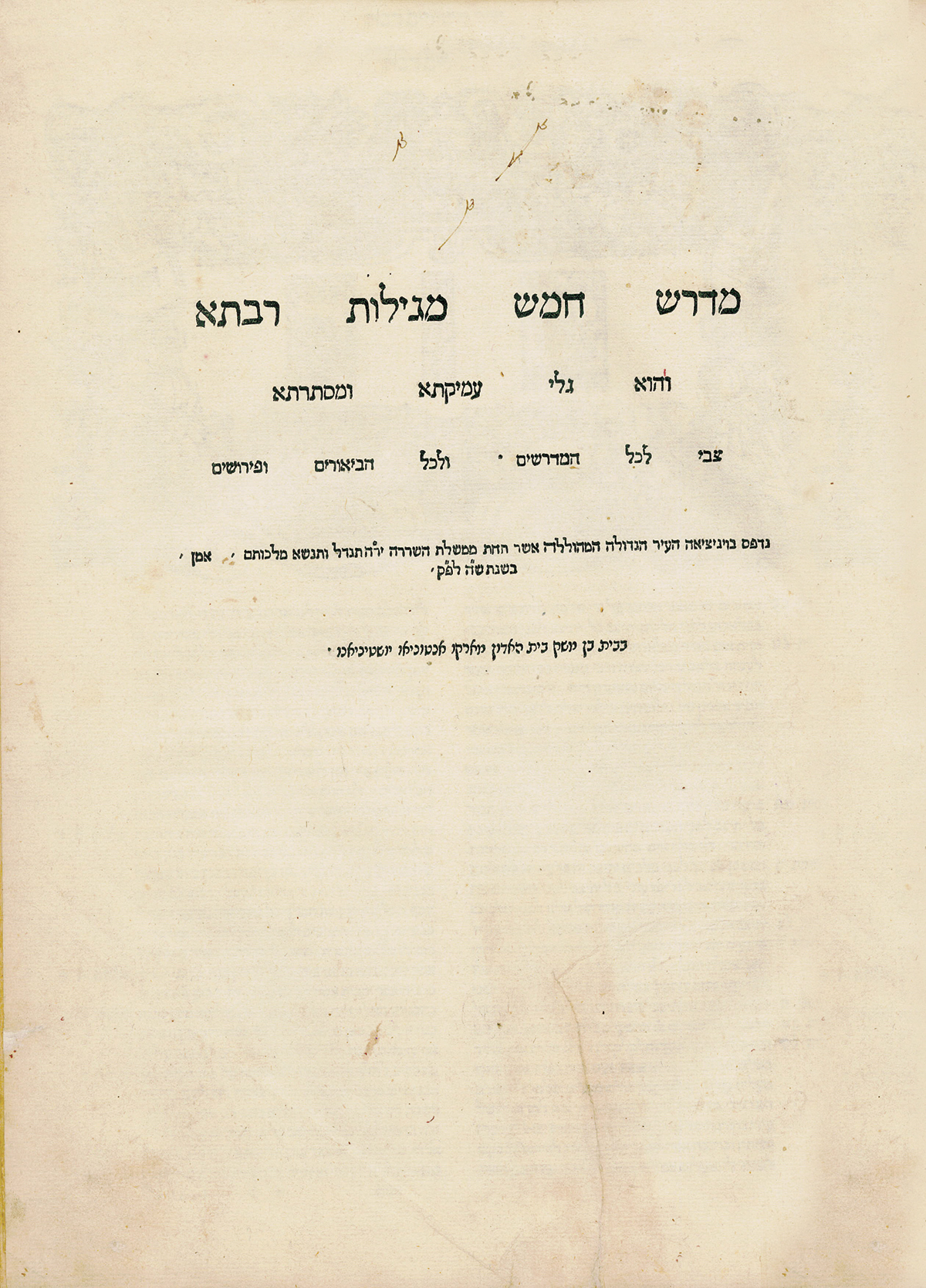
Auction 29 · Lot 43
Midrash Chamesh Megilloth Rabatha [on the Five Scrolls]
- Estimate
- $3,000–$4,000
- Hammer price
- Not recorded
Historical auction record. Hammer prices exclude buyer’s premium and taxes.
author
(MIDRASH)
printer
Justinian-Adelkind
Place
Venice
Publication
1545
Description
First word of each Book within elaborate woodcut design. Printed in double columns. A few Hebrew marginalia in an old Italian hand. On final page, censor’s signature, “Visto per me Gio[vanni] Dominico Carretto 1688.” Cf. Wm. Popper, The Censorship of Hebrew Books (1969), bet. pp. 130-1, pl. 7
references
Vinograd, Venice 242; Steinschneider 3756
summary
Traditionally each of the Five Scrolls is reserved for a different occasion in the Jewish year: The Song of Songs is read on Passover; Ruth on Shavu’oth; Esther on Purim; Lamentations on the Fast of the Ninth of Av; and Ecclesiastes on Sukoth.
The first of the five Midrashim, Shir ha-Shirim Rabbah, was also known in medieval times as “Midrash Chazitha” on account of the first keyword of the text, a citation of the verse in Proverbs 22:29, “Chazitha ish mahir bi-melachto.”
The Midrash on Lamentations is preceded by a long overture, or Pethichatha. It begins “Rabbi Abba bar Kahana pathach” (Rabbi Abba bar Kahana opened). In Chassidic circles it was playfully interpreted that the rabbi named, opened a “tzinor” or conduit of divine inspiration.
The Aramaic of the Midrashim is chock-full of obscure words and is a challenging text to absorb.
ff. (90). Some staining, repair on f. 80, few words censored. Old vellum. Folio
Enquire about this lot