
Auction 29 · Lot 33
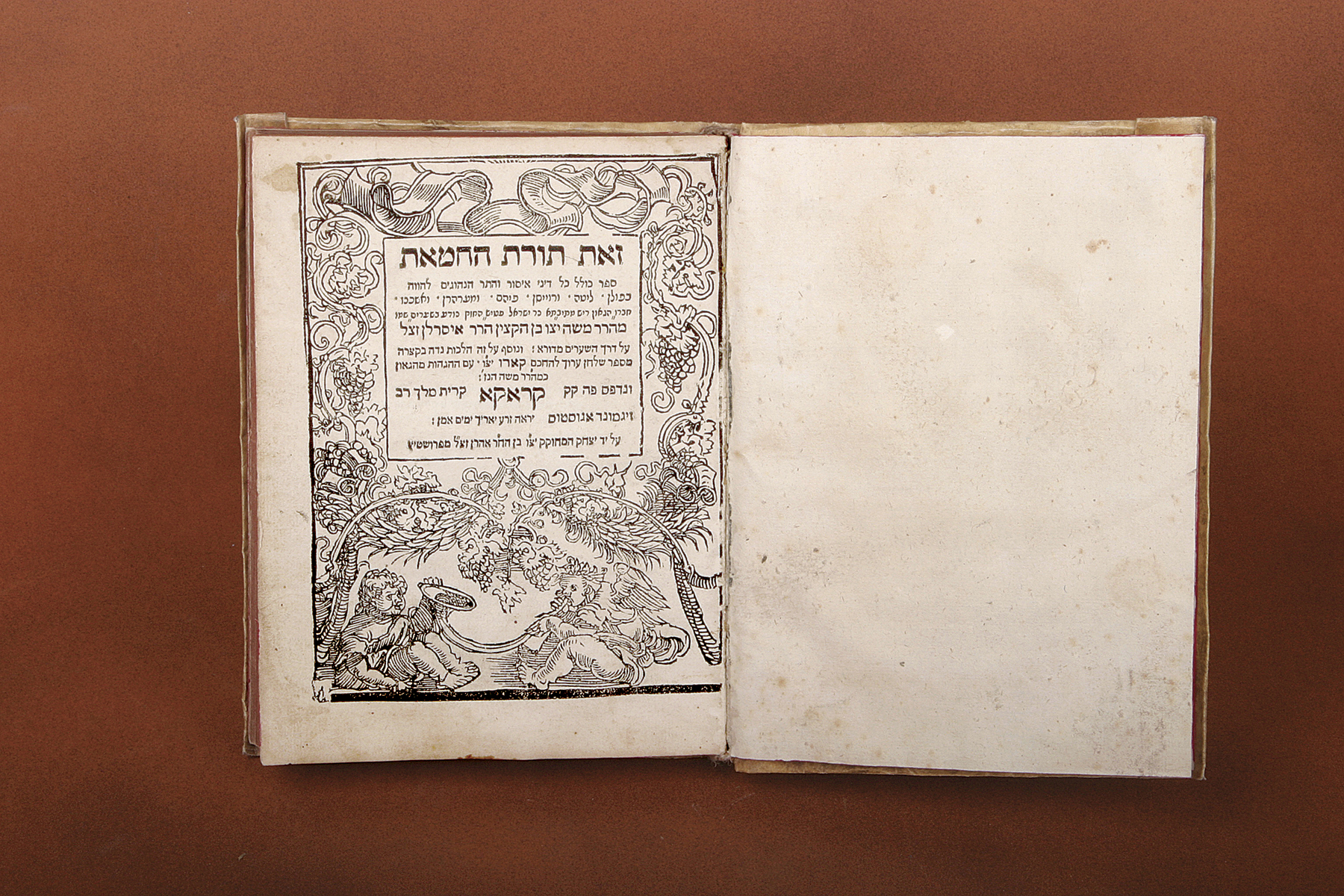
(ReM”A). Zoth Torath Ha-Chatath. With Hilchoth Nidah by Joseph Karo, accompanied by glosses by the ReM”A’
- Estimate
- $12,000–$15,000
- Hammer price
- $24,000
Historical auction record. Hammer prices exclude buyer’s premium and taxes.
author
ISSERLES, MOSES.
printer
Yitzchak Prostitz
Place
Cracow
Publication
1569
Description
FIRST EDITION. Title within woodcut floral arch with illustration of winged cherub blowing horn. Separate title page for Hilchoth Nidah with eight illustrated woodcut panels (f. 85)
references
Vinograd, Cracow 31; Mehlman 696; Steinschneider 6483,13 “Ed. pulchra et rara” (a beautiful and rare edition)
summary
THE FIRST HALACHIC WORK BY THE ReM”A.
R. Moses Isserles was born in Cracow c.1525 and was regarded among his contemporaries to be the “Maimonides of Polish Jewry.” The ReM”A gained a world-wide repute as a decisor, and was consulted by all the great Rabbis of his time on halachic matters. Among those who corresponded with him were Meir Katzenellenbogen, Joseph Karo, Solomon Luria and his brother-in-law, Joseph Katz. See EJ, IX cols.1081-85
The Torath Ha-Chatath is one of the most important Codes concerning dietary and menstrual laws. Its importance lies in the fact that it includes the customs of Lithuania, Poland, Russia, Moravia, Germany etc. which in may cases differ from the rulings of Joseph Karo in his Shulchan Aruch. The ReM”A was frequently lenient in cases where personal hardship was involved and generally leaned toward Polish custom. This attitude irked many of his peers, especially R. Chaim b. Betzalel, the brother of the Mahra"l of Prague, who criticized him severely in his Vikuach Mayim Chaim. Other critical notes were penned by the author of Tosfoth Yom Tov, R. Yom Tov Lipman Heller, under the title Torath Ha-Asham. Despite the criticism of his colleagues, his decisions were accepted worldwide by Ashkenazic authorities, many citing the adage of “Kol Yisrael yotzim be-yad ReM”A” (a play on words referring to the Jews who were liberated from Egypt with an “outstretched hand”)
ff.104, (23). Slight staining, marginal notes in a late 16th century Ashkenazic hand. Old vellum. 4to
Enquire about this lot