
Auction 17 · Lot 422
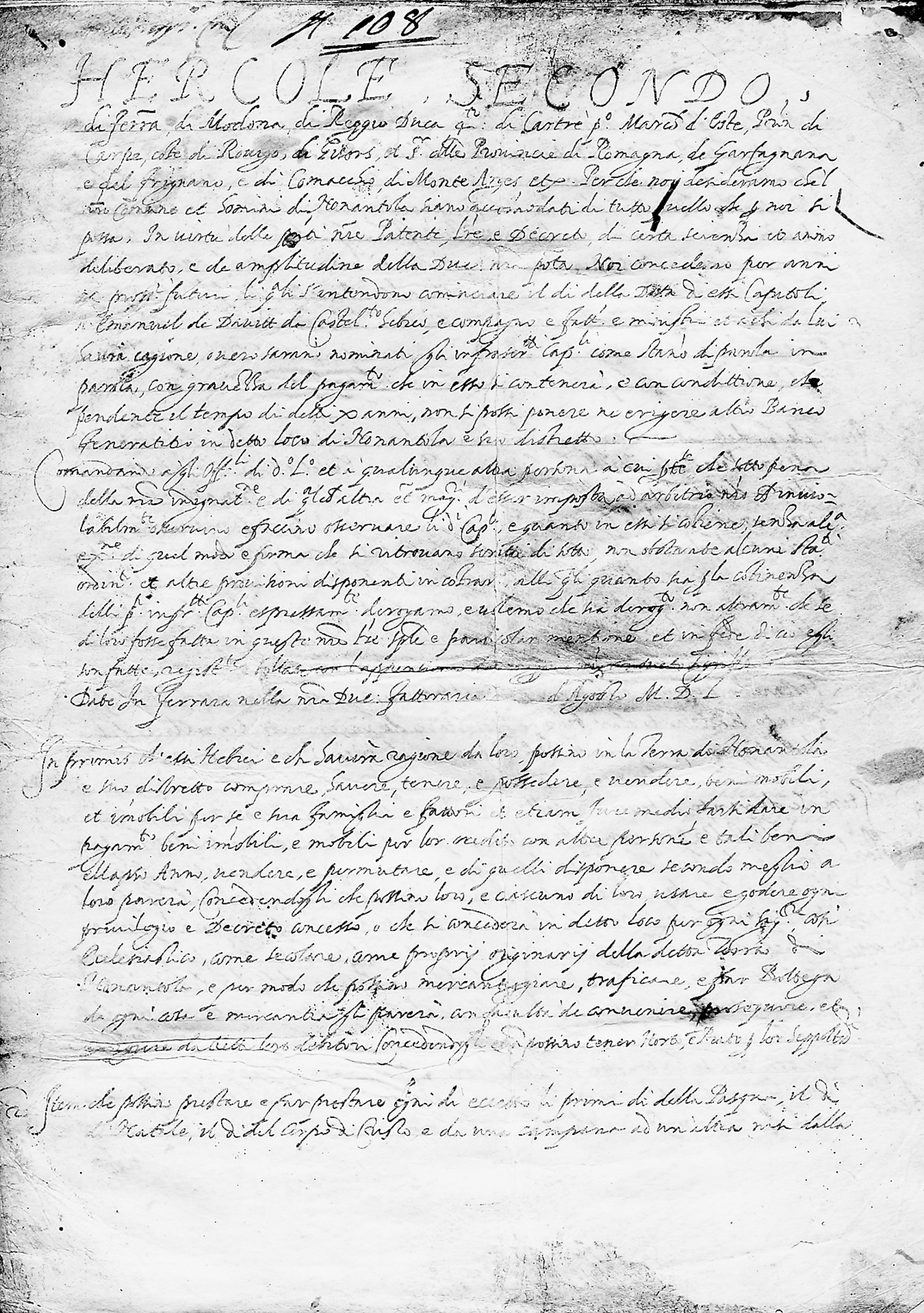
Jewish Historical and Economic Document pertaining to Jewish Life in Italy in the 16th Century. Contains Jewish Privileges and Banking Contract for Jews of Nonatola. Graced by Duke Hercole II
- Estimate
- $10,000–$15,000
- Hammer price
- Not recorded
Historical auction record. Hammer prices exclude buyer’s premium and taxes.
author
(ITALIAN JUDAICA)
Place
Ferrara
Publication
1550
Description
Manuscript on vellum
summary
Privileges and bankers' contracts made between the Italian authorities and the Jews from the mid-13th century constituted the legal basis for the status of the Jews in most parts of Italy. The privileges were generally limited for a period of a few years and were required to be renewed upon succession of the rulers of the various Duchies. These privileges determined the rights and obligations of the Jews. It granted them freedom of worship as well as engage in commerce and trade. The Jewish bankers had to provide credit to the local population, make payments to the Duke and observe local laws.
Contained here are forty-five conditions and privileges. Including the right of Jews to rent houses, sell land, hire lawyers, carry weapons for self defense, permission to build synagogues, perform ritual slaughters, and the right not to have to lend money on the Sabbath and Jewish holidays. It also prohibited local authorities from forcing Jews to wear special clothing. In addition it stipulated that Christian holy objects (crucifixes) may not be taken as security without the permission of the church.
Duke Hercole II retained authority over Ferrara d'Este, Modena and the surrounding areas. He issued a number of such privileges in 1550. It also contains details of privileges issued to the Jews of Nonatola (near Modena) and especially to the son of David from Castelleto to open a bank (Banchi Fenevatizi) with lending privileges for a period of ten years.
During this period (1529-1611), Avtalion Modena (the uncle of the famous Leon de Modena) was the Rabbi of Ferra and Nonatola (See Steinschneider Hebr. Bibl. XXI, 1881 p.27). Nonantola is known for its famous medieval Christian Abbey
See S. Simonsohn, History of the Jews...Mantua (1977) esp. chaps. II and IV
ff. 8 Few stains, trace foxed and wormed. Elaborately gilt-tooled chestnut morocco with central cartouche surounded by floral embellishments set within a floriated frame with fan corner motifs on upper and lower covers. Gilt extras, marbled end papers. Folio
Enquire about this lot