
Auction 24 · Lot 262
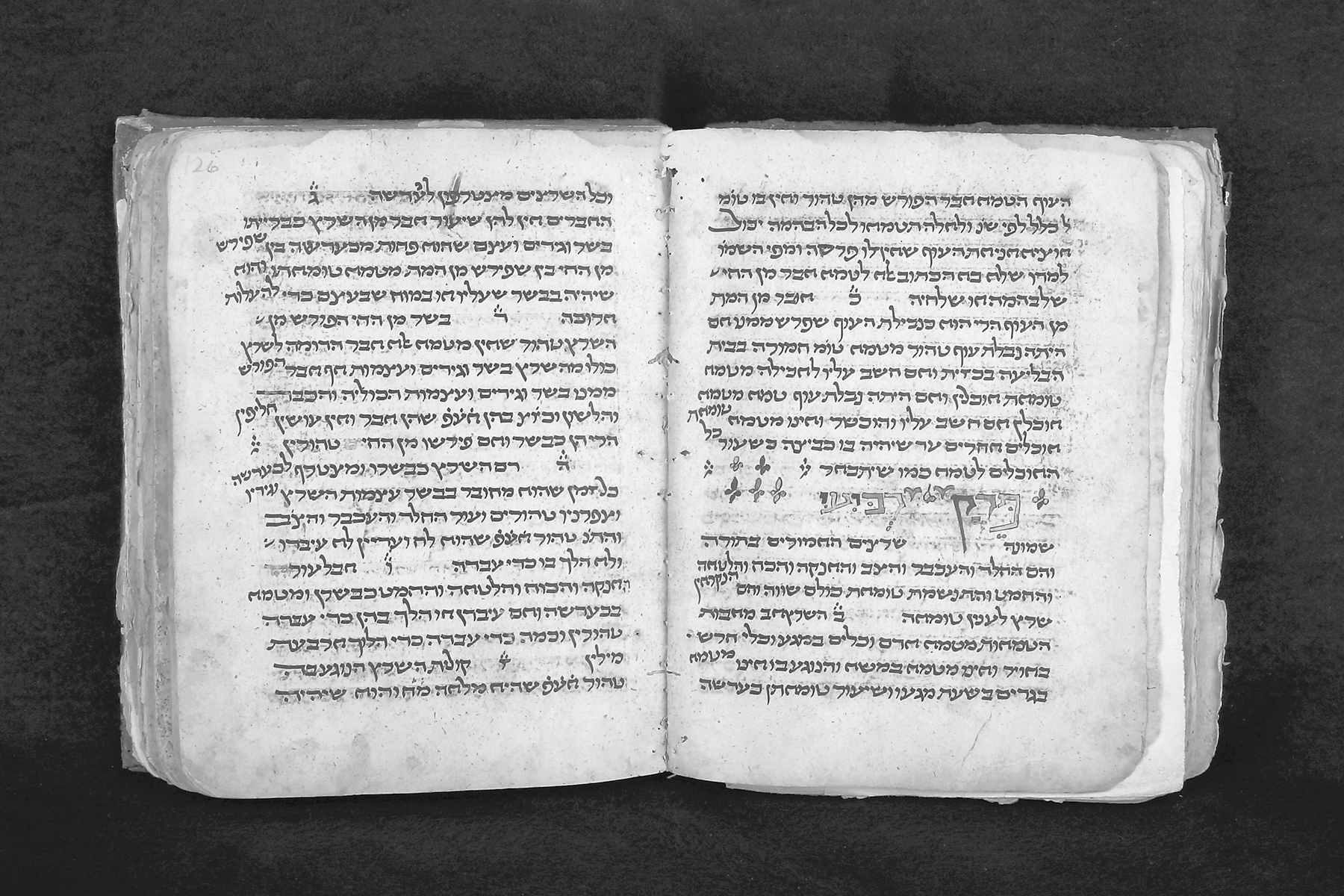
(MAIMONIDES / RaMBa”M). Mishneh Torah (Yad Hachazaka). Sepher Taharah, Book Ten (of 14)
- Estimate
- $35,000–$45,000
- Hammer price
- Not recorded
Historical auction record. Hammer prices exclude buyer’s premium and taxes.
author
MOSES BEN MAIMON.
Place
Yemen
Description
Hebrew Manuscript on paper. 275 leaves. Many chapter headings throughout decorated in blue, red,brown and yellow (e.g. ff. 79a, 81a, 83a, 85b, 87b, 89b,160a etc.) With a geometric illustration pertaining to the laws of impurity on ff. 20b.Various square Yemenite scripts with marginal notes in Hebrew and Judaeo-Arabic in later hands. A few leaves of text missing and small portions of other leaves supplied in a later Yemenite hand. Some notes are signed and dated in accordance with the “shtarot” calculation prevalent in Yemenite manuscripts. For example
summary
Dr. Benjamin Richler, of the Institute of Microfilmed Hebrew Manuscripts of Jewish National and University Library, Jerusalem dates this manuscript to the 14th-century.
THE RABBI JOSEPH KAPACH COPY (with his marginal note on ff.164b referring to his edition of Maimonides’ commentary on the Mishnah). Rabbi Kapach also used readings of this manuscript for his comprehensive commentary on Mishneh Torah.
The manuscript contains a number of textual variances from the standard published editions. Yemenite scholars maintain that their Maimonides manuscripts are more precise than other comparable texts.
The dating of documents and manuscripts according to the “Shtarot” Chronology was abolished by R. David Ibn Zimra (RaDva”Z) in Egypt, who established the use of dating chronology according to the date of creation. On this unusual method of dating, see: H. Bornstein, Ta’arich Shtarot, in: Ha’Tekufah, Vol. 8, pp.290-321 and A. A. Akiva, Calendar for 6000 Years, with Comparative Tables and Introductions by Nathan Fried (pp.649-650). (Jerusalem, 1976). Fried states that only the Jews in the remote exile of Yemen continued to employ this method of dating until 1950. When they emigrated to Israel this chronological method ceased to be used
Several leaves loose. Old sheep. Sm.folio
Enquire about this lot