
Auction 36 · Lot 236
(EGER, AKIVA OF HALBERSTADT).
- Estimate
- $1,500–$2,000
- Hammer price
- $1,900
Historical auction record. Hammer prices exclude buyer’s premium and taxes.
Place
(Halberstadt)
Publication
Late 18th-early 19th century
Description
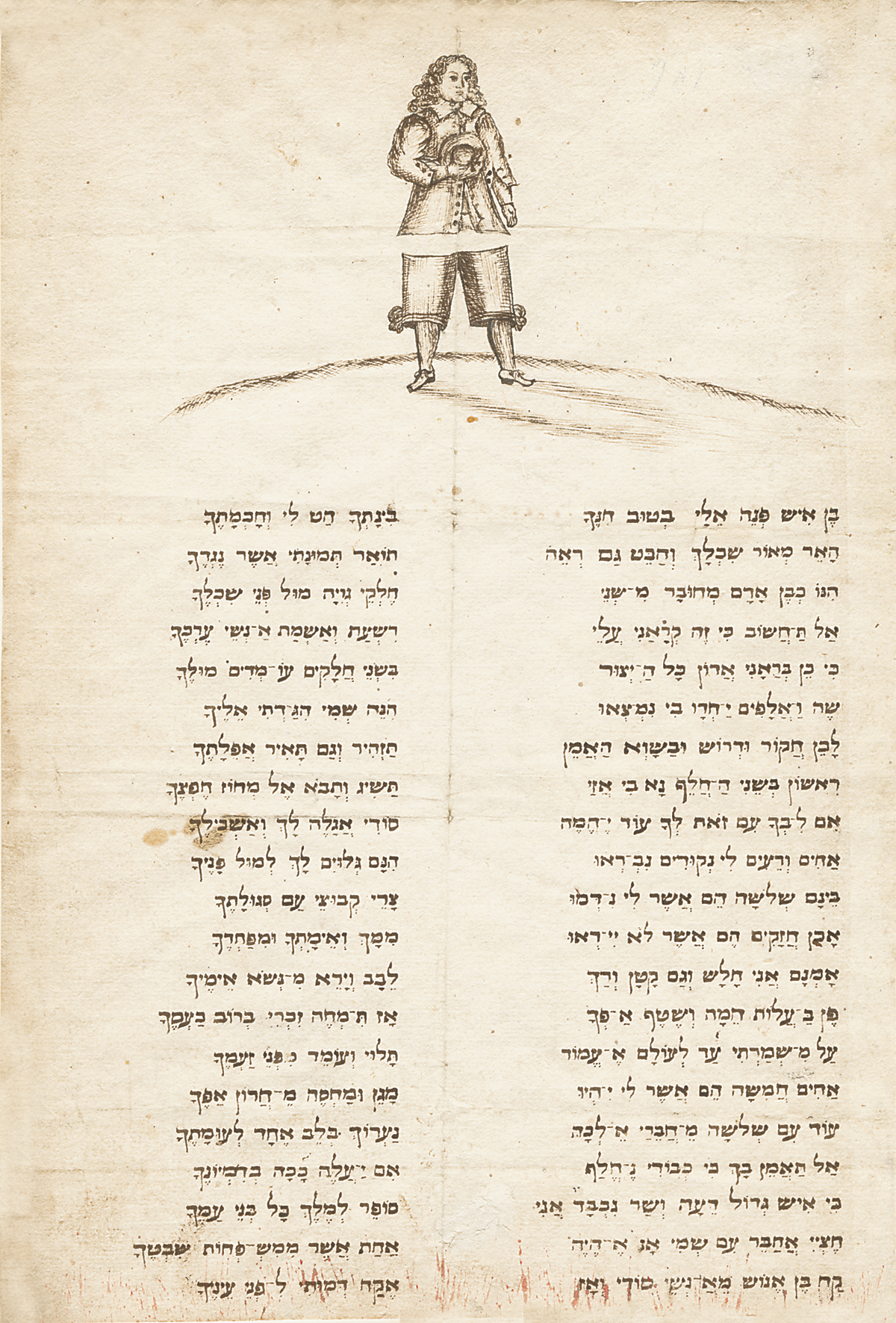
Collectanea of Halachic novellae by anonymous rabbi of Halberstadt, Germany:
f.2: TB, Shavu’oth f.40.
f.3-4: TB, Shavu’oth 33b.
f.5.: TB, Avodah Zarah f.12.
f.6r.: TB, Chulin 84b.
f.6v.: Heard from R. Jonathan [Eybeschuetz] of Hamburg. The Jewish nation is judged on the first day of Rosh Hashanah, while the nations of the world are judged on the second day of Rosh Hashanah (a halachic explication).
ff. 8r.-9v: Interpretation of TB, Bava Metzi’a f.115.
ff.10r.-11r.: “Mah she-chanani Hashem be-Siyum Masecheth Bava Bathra be-yom 22 Marcheshvan 5540 [1780]. Pilpul on TB, Bava Bathra 176a, “Ma’aseh u-va liphnei R. Yishmael.”
ff.12-18: Halachic discourses on the Torah portion of the week. (Le-Parshath Nitzavim-Vayelech me-ha-gaon R. Moshe Rapp). [R. Moshe Rapp was a dayan in Frankfurt a/Main, d. 1762. See N.Z. Friedmann, Otzar Harabanim, p. 315, no. 15162.]
ff.19-26: Halachic discourse on subject of “Tokpho kohen” (TB, Bava Metzi’a 6b).
f.27r.: Be-Parshath Toldoth.
f.28: Le-Parshath Shophtim ve-li-nethinath sepher Torah le-beith ha-knesseth me-adm”o mhor”r Shmuel F[rank]f[urt].
f.29 : Interpretation of TB, Pesachim 4a, “Ve-hashta de-kayma lan di-le-chulei alma ‘or urtha hu, etc.”
f.30: Interpretation of TB, Chulin 11a, “Mina ha miltha…zil bathar ruba?” (from R. Jacob Halle).
f.32r.: Interpretation of TB, Berachoth 20b.
ff. 33-36r. -Mah she-amarti be-T’U Kislev 5584 [1824] etzel Ch[evrah] K[adisha]. Interpretation of exchange between Rabbi Akiva and Pappus ben Judah (TB, Berachoth 61b).
f.36v.: - Interpretation of TB, Chulin 91a, “Amar R. Yosé be-Rabbi Chanina, mai di-khethiv…zeh gid ha-nasheh, she-pashat issuro be-chol Yisrael, etc.”
ff. 37-39: Discourse delivered on Yahrzeit of author’s mother, the last day of Passover, 1823. Pilpul on TB, Pesachim 59b, “Rav Kahana rami, kethiv, ‘Lo yalin chelev chagi ad boker,’ etc.”
f.39: Eulogy delivered for R. Akiva Eiger of Halberstadt. “Mah she-amarti al beith almin ke-she-niphtar adoneinu moreinu ve-rabbeinu ha-gaon ha-gadol ha-mephursam bi-kehilatheinu mohr”r Akiva Eiger be-yom aleph, rosh chodesh Marcheshvan, 5583 [1823]. [What I said at the cemetery at the burial of our Master, the great genius, famous in our community, R. Akiva Eiger, Sunday, New Moon of Cheshvan, 1822.] Within the eulogy, mention is made of the day of death, namely the Sabbath day. Thus, R. Akiva Eiger was laid to rest on the day following his passing.
ff. 40-43: Dodi li-Tzevi - Commentary on Psalms 119: 1-16. (Text of Psalms in square Hebrew characters in center, surrounded by commentary in Aschkenazic cursive
summary
Rabbi Akiva Eiger of Halberstadt was born in 1769 and deceased on the Sabbath day, 29 Tishri, 5583 [1822]. (N.Z. Friedmann, Otzar Harabanim, p. 347, no. 16768, gives 5584 [1823] as the date of death.) He was the son of Rabbi Benjamin Wolf Eiger of Leipnick, son of Rabbi Akiva Eiger “the Elder” (1722-1758), author “Mishnath de-Rabbi Akiva” and a native of Halberstadt. R. Akiva Eiger seved as rabbi of Halberstadt from 1814 until his death. Before that, he was one of the scholars of the renowned “Klaus” of Halberstadt, which had been endowed by the philanthropist Issachar Halevi Bermann. See JE, Vol. VI, pp. 165-166; EJ, Vol. VI, col. 471
ff. (43). Brown ink on coarse paper. Contemporary boards, rubbed. Lg. 4to
Enquire about this lot