
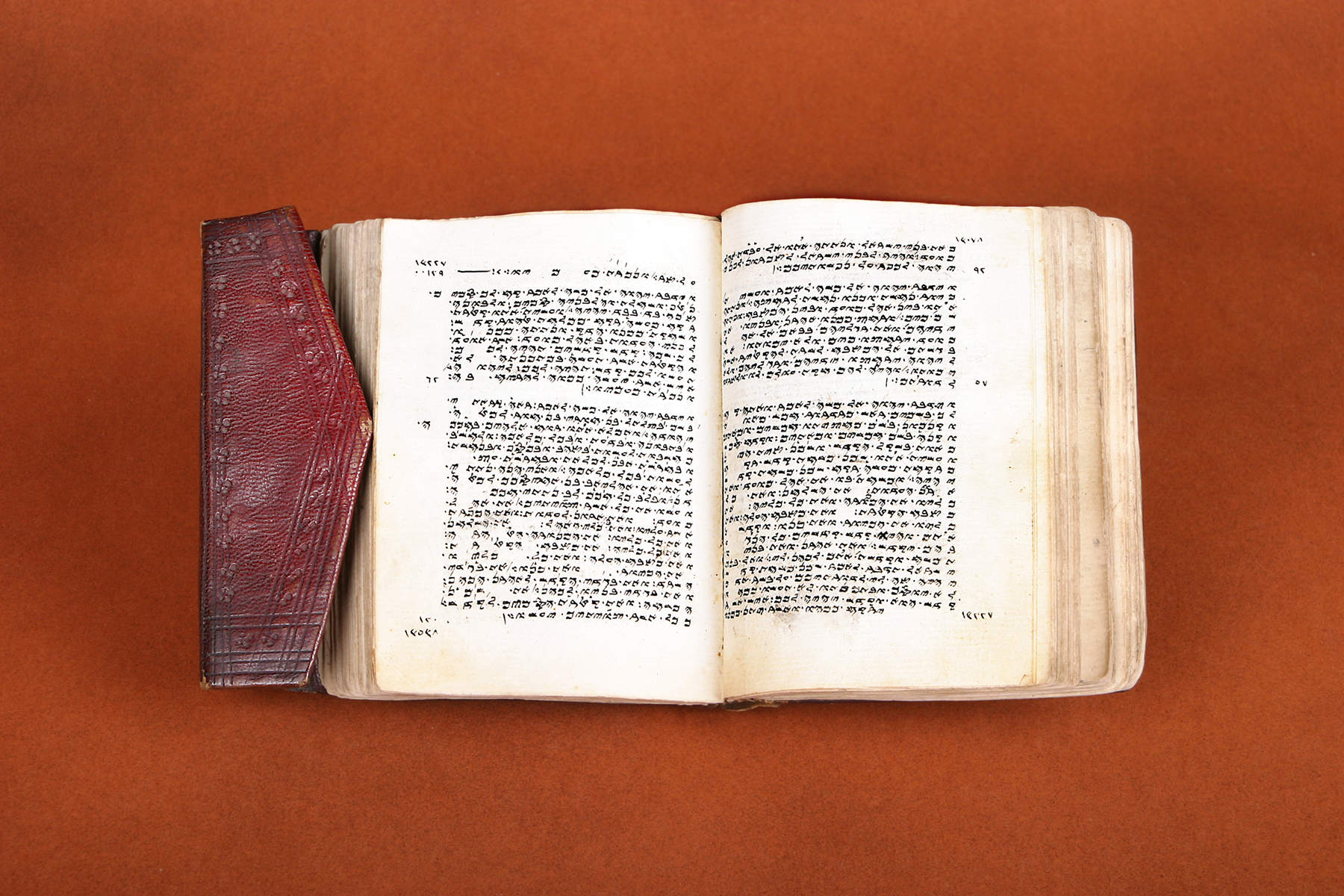
Auction 33 · Lot 221
Pentateuch in Samaritan Hebrew script. Written by Jacob ben Aaron ben Solomon, Priest, in the tenth month of 1293a.h. [1876 c.e.]
- Estimate
- $3,000–$5,000
- Hammer price
- Not recorded
Historical auction record. Hammer prices exclude buyer’s premium and taxes.
author
(SAMARITAN LITERATURE)
Publication
1876
Description
Inscriptions in Arabic
summary
In a sense, the Samaritans (Heb. Shomronim) may be considered the oldest sect within Judaism. Generally, it is assumed that the schism between the Samaritans and the Judeans goes back to the conquest of Samaria (Shomron) by the Assyrians in 722 B.C.E. However, the Samaritans themselves claim the separation is even older, with its roots in the estrangement between the Northern and Southern tribes. The Samaritans maintained their own temple in the city of Shechem (Nablus), in competition with the Judean temple in Jerusalem. In the Talmud, there are frequent discussions concerning the halachic or legal status of the “Cutheans” (another name for the Samaritans, based on their supposed place of origin, the Babylonian city of Cutha, see II Kings 17:24). There was a period in which the sages of the Talmud were more favorably inclined to these “Cutheans,” even going so far as to state, “Any commandment which the Cutheans retained, they observe much more punctiliously than Israel” (TB, Hulin 4a). However, after a “likeness of a dove” was found in their Temple on Mount Gerizim, their status was changed from that of converts to Judaism, to that of non-Jews (TB, Hulin 6a). See Maimonides’ Commentary to the Mishnah, Berachoth 8:8 (Kafih ed., p. 49). Today, it is estimated that there are some 700 surviving Samaritans, most residing in Shechem (Nablus) under the Palestinian Authority, and a minority in the city of Holon, Israel.
The Samaritan version of the Pentateuch is replete with fascinating variants from the Rabbinic or Masoretic Bible. The poresent manuscript was written by one of the venerable priests of the community. In A Companion to Samaritan Studies, edited by Crown, Plummer and Tal (1993), we find that the scribe of the present manuscript, Jacob b. Aaron (1841-1916) succeeded his uncle, Amram, as High Priest in 1857. “In addition to restoring, translating and correcting many manuscripts, he was an essayist and hymn writer. His Western contacts included Moses Gaster.” Ibid., p. 135. (See further ibid., p.13, s.v. Amram b. Salama)
ff.270 (including a few blanks). 30 lines per page. Black ink on thick paper. Some smudging, few leaves loose. Original sheep binding. 8vo
Enquire about this lot