
Auction 31 · Lot 199
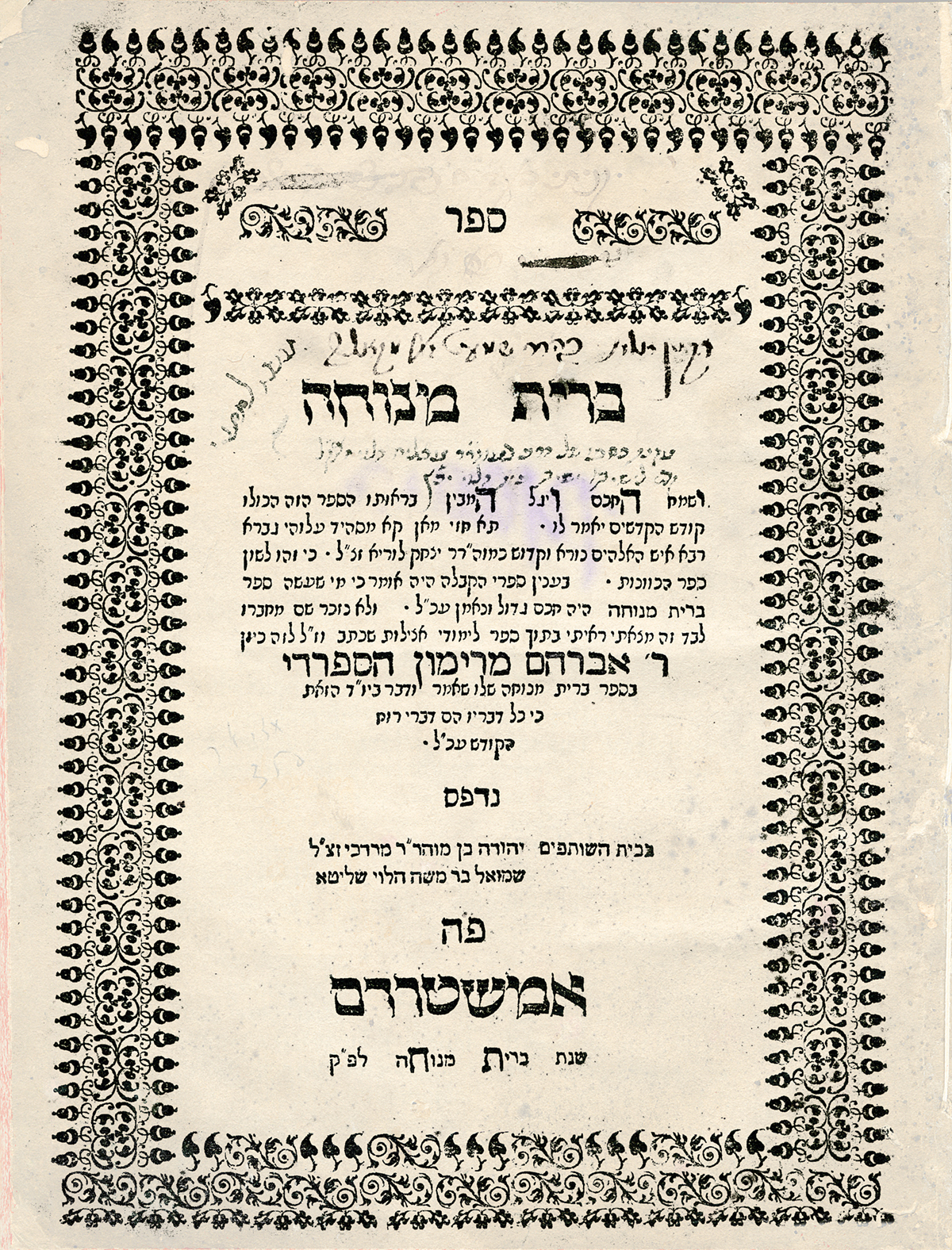
ABRAHAM OF GRANADA (Attributed to). Berith Menuchah
- Estimate
- $800–$1,200
- Hammer price
- $900
Historical auction record. Hammer prices exclude buyer’s premium and taxes.
author
(KABBALAH)
printer
Judah ben Mordecai and Samuel ben Moses Halevi
Place
Amsterdam
Publication
1648
Description
FIRST EDITION. Title within typographical border. Contains two magic amulets (ff.39v.-40r.). (See below.) On title, signatures of former owners: “”Mazliah Halevi” and “Elijah ben Shemaiah of Kotzk”
references
Vinograd, Amsterdam 145; Fuks 252
summary
In R. Chaim Vital's introduction to Etz Chaim there appears a list of earlier kabbalistic works approved and vetted by his master R. Isaac Luria (AR”I). Concerning Berith Menuchah, Vital says the following: “The book Berith Menuchah came about through the same sort of inspiration enjoyed by my teacher and master [R. Isaac Luria], for there was revealed to him [i.e. the author of Berith Menuchah] the soul of a righteous man who instructed him. All his words are cryptic for he was secretive by nature and exceedingly deep.”
Berith Menuchah dates from the second half of the 14th-century and derives from the so-called Sepher ha-Iyyun School. It deals with the various vocalizations of the Divine Name, names of angels and with practical kabbalah (kabbalah ma’asith). Described in detail on f.39v one finds the seal of Bilid, who succeeded Ashmedai as third king of the demons. Scholem traces the name Bilid (also Bilad and Bilar) back to Arabic tradition and ultimately to Apocalyptic literature, where “Beliar” is the name of Satan. See G. Scholem, Kabbalah (1974) pp. 64-5, 181-2, 323-4.
It is reported that the late Rebbe of Belz commanded that Berith Menuchah be read to him on the night of Yom Kippur, particularly the narrative of the high priest’s dramatic entry into the Holy of Holies on Yom Kippur.
Berith Menuchah is one of twenty Hebrew and Yiddish books printed by the partners Judah b. Mordecai and Samuel ben Moses Halevi in Amsterdam between the years 1648-1651. Fuks has pointed out the unusual types used for the title. See Fuks, Hebrew Typography in the Northern Netherlands 1585-1815 (1984), p. 187, fig. VIII
A further examination of this work accompanies the Lot
ff.40. Stained. Modern calf-backed boards. 8vo
Enquire about this lot