
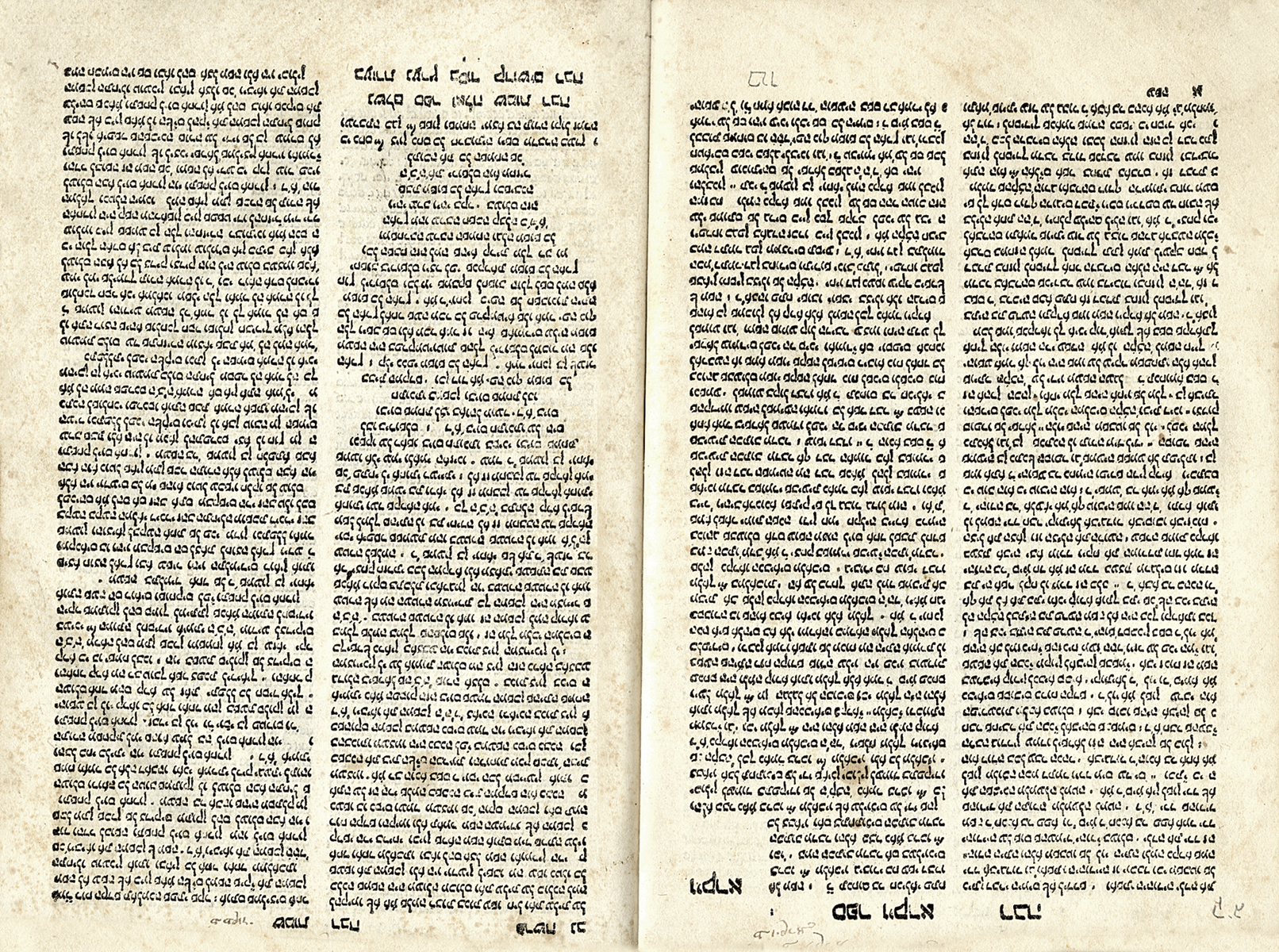
Auction 25 · Lot 36
[Midrashim on the Pentateuch]. Anonymous
- Estimate
- $20,000–$30,000
- Hammer price
- $19,000
Historical auction record. Hammer prices exclude buyer’s premium and taxes.
author
MIDRASH RABBAH
printer
Joseph Gabbai and Abraham Yerushalmi
Place
Constantinople
Publication
1512
Description
FIRST EDITION. Five parts in one volume. On f.2r. signature of owner, “Judah Ephraim Sinigaglia,” member of a prominent Italian Jewish family. (See EJ, Vol. XIV, col. 1615.) A former owner has designated the parshiyoth (sections of Torah) in brown ink on tops of leaves
references
Vinograd, Const. 35; Yaari, Const. 19; not in Adams
summary
EDITIO PRINCEPS OF MIDRASH RABBAH - AN EXCEPTIONALLY RARE TEXT.
The Midrash Rabbah is the most important of the Aggadic collections. It is heralded “Large” (Rabbah) on account of its sheer quantity and to distinguish it from the smaller collections on the Biblical books. The systemization and organization of the mass of Aggadic matter accumulated in this collection lasted several centuries. The earliest Midrash is Bereshith Rabbah; its date of compilation can be safely placed at the beginning of the sixth century. The other Midrashim on the Pentateuch are of a later date. Shemoth Rabbah was compiled toward the close of the seventh century. Devarim Rabbah shows signs of later authorship, no doubt the beginnings of the tenth century. Bamidbar Rabbah is the most recent and most likely received its present form not earlier than the beginning of the twelfth-century. (Parashath Nasso, 14:13 refers to the “four elements” [arba'ah teva'im], an Aristotelian notion). Chajes points out that various books of Midrash Rabbah were unknown to the medieval greats. It would seem that RaSHBa"M possessed only Bereshith Rabbah and Vayikra Rabbah. See his commentary to Bava Bathra 134a, s.v. hagadoth. Recently R. Moshe Greenes has shown it is likely Nachmanides acquired Bamidbar Rabbah only towards the completion of his commentary to Pentateuch. See R. Zevi Hirsch Chajes, Introduction to Midrash Rabbah (printed in Vilna ed. Midrash Rabbah [1909]), pp. xv-xvi; R. Moshe Greenes, Koran P'nei Moshe (1988), p. 153.
Most of these Midrashic texts were compiled in Palestine, though both Palestinian and Babylonian scholars were well versed in the Aggadic traditions of one another. The Midrash Rabbah therefore contains sayings, parables, interpretations and proverbs of both Palestinian and Babylonian scholars. Due to this Palestinian provenance, much of the material found in the Midrash Rabbah overlaps that found in the Talmud Yerushalmi. Both are rich in Greek loan-words; many of the latter are explicated in R. Nathan ben Yechiel of Rome's Sepher Aruch
ff. 68,44,34,67,16. Lightly foxed and stained in places, minimally trimmed. f.1 and f.223 supplied in facsimile. Modern blind-tooled calf. Folio
Enquire about this lot