
Auction 21 · Lot 213
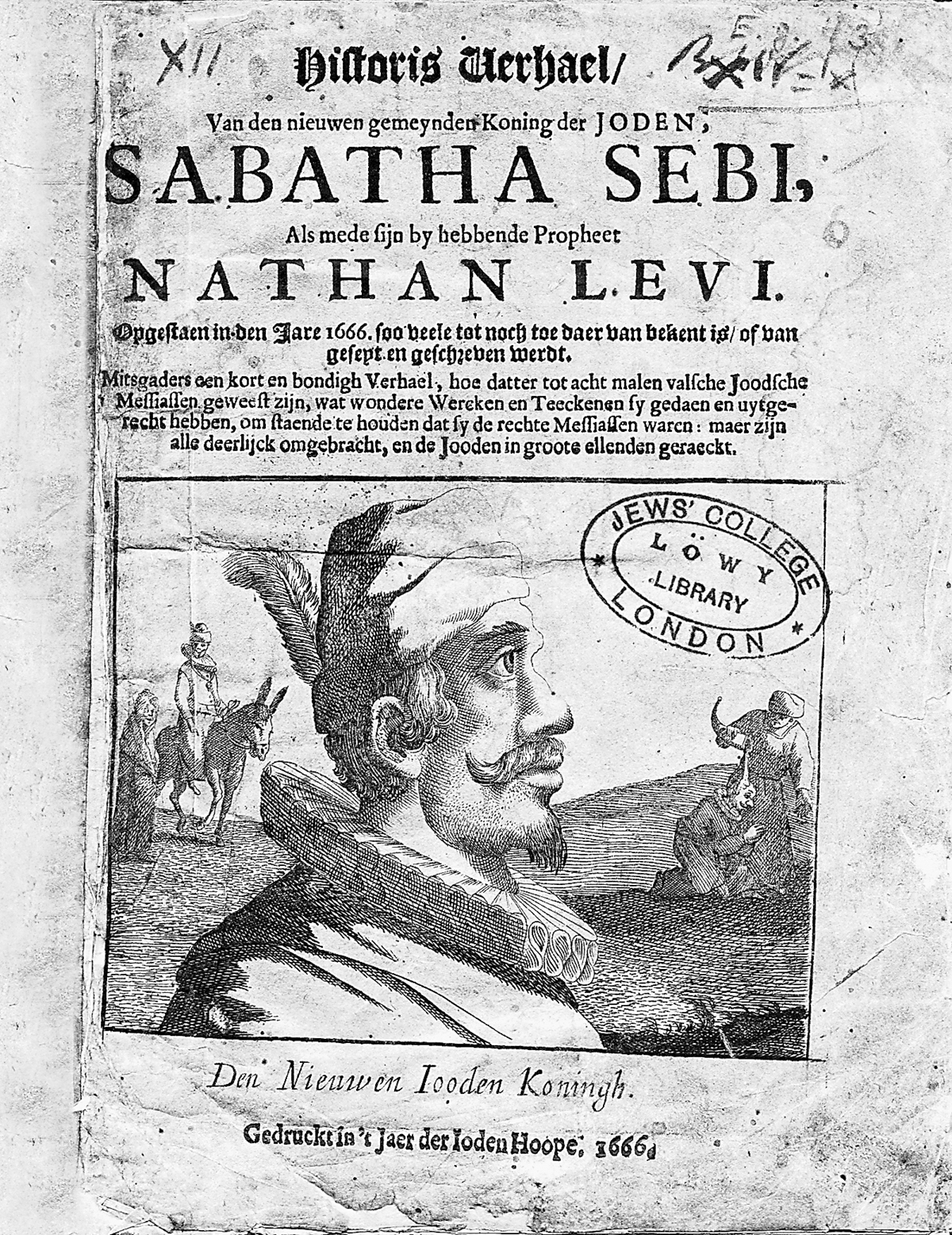
Anonymous. Historis Verhael van den nieuwen gemeynden Koning der Joden, Sabatha Sebi, als mede sign by hebbende Propheet Nathan Levi. Opgestaen in den jare 1666.
- Estimate
- $2,000–$3,000
- Hammer price
- $2,500
Historical auction record. Hammer prices exclude buyer’s premium and taxes.
author
(SABBATIANA)
printer
n.p.
Place
n.p.
Publication
1666 (Scholem mistakenly writes “no date”)
Description
Unique edition. Dutch. Supposedly the first year of the “Messiah”’s reign, 1666. Forntispiece complete with picture of Shabbetai Zevi in foreground; in background two scenes of Messiah riding on donkey and being anointed by Prophet Elijah. On page 2, picture of the Sabbatian prophet Nathan of Gaza at head of presumedly Jewish troops marching to battle . Neither picture appears in Alfred Rubens, A Jewish Iconography.
references
G. Scholem, Sabbatai Sevi, p. 946 (no. 89)
summary
A contemporary account of the activities of pseudo-messiah Shabbetai Zevi (1626-1676). In the update on page 6, “Waer sabatha nu is” (Where Sabatha is now), the journalist describes Zevi’s sea voyage on December 31,1665 from Smyrna (Izmir) to Constantinople (Istanbul) to meet with the Turkish sultan and induce him to hand the Holy Land over to the Jews. According to Scholem, Sabbatai Sevi (p. 432) the pseudo-Messiah and his entourage set sail on December 30. Thus, the report in the book possesses a good degree of accuracy. The misnomer “Nathan Levy” for Nathan of Gaza, whose true surname was “Ashkenazi,” is to be forgiven. Scholem writes: “Christian sources often wrote Nathan Levi, and their mistake was taken over by some historians. The form Nathan Levi is an amalgamation of the names of the two chief protagonists Nathan Ashkenazi and Sabbatai Sevi. The latter name being unfamiliar to Christians, it was automatically ‘corrected’ to Levi.” (Ibid., p. 200, n. 1). It seems Scholem overlooked the obvious: By fabricating the surname “Levi” for Nathan, journalists created a rhyme: Sabbatai Sevi and Nathan Levi. Christian readers would have found this spoof on the dynamic duo laughable.
The second part of the fascicle addresses the broader issue of “Jewish Messiahs.” Sabbatai Sevi is put in historical perspective against the backdrop of earlier pseudo-Messiahs, such as Bar Cochba (Bar Kosiba), David Alroy, and
other less famous personalities. The author makes refrence to Solomon ibn Verga’s chronicle Shevet Yehudah.
Evidently at the time Scholem wrote his description of our work, he had no hard copy in front of him.
16 pp. Contemporary binding. 4to. (Scholem mistakenly writes “8vo”).
Enquire about this lot