
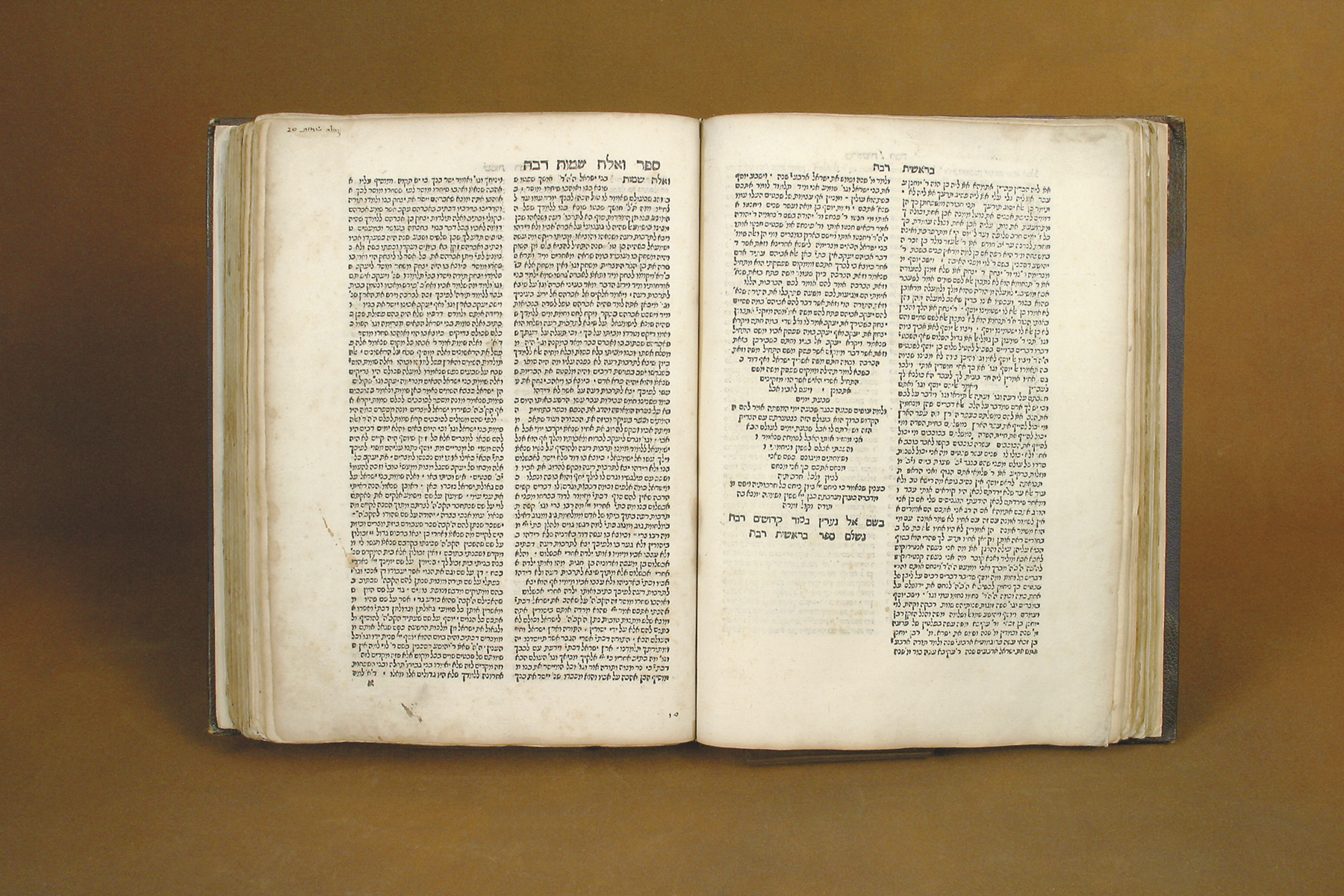
Auction 20 · Lot 28
[Midrashim on the Pentateuch]. Anonymous
- Estimate
- $20,000–$30,000
- Hammer price
- $101,000
Historical auction record. Hammer prices exclude buyer’s premium and taxes.
author
MIDRASH RABBA
printer
Joseph Gabbai and Abraham Yerushalmi
Place
Constantinople
Publication
1512
Description
FIRST EDITION. Five parts in one volume
references
Vinograd, Const. 35; Yaari, Const. 19; not in Adams
summary
The editio princeps of the Midrashim to the Pentateuch. A FINE WIDE-MARGINED COPY OF AN EXCEPTIONALLY RARE TEXT
The Midrash Rabboth are the most important of the Agadic collections. It is heralded “Large” (Rabba) on account of its sheer quantity and to distinguish it from the smaller collections on the Biblical books. The systemization and organization of this mass of Agadic matter accumulated in this collection lasted several centuries. The earliest Midrash is Bereshith Rabba; its date of compilation can be safely placed at the beginning of he sixth-century. The other Midrashim on the Pentateuch are of a later date: Shemoth Rabba was compiled toward the close of the seventh-century, Devarim Rabba shows signs of later authorship, no doubt the beginnings of the tenth-century , Bamidbar Rabba is the most recent and most likely received its present form not earlier than the beginning of the twelfth-century. Most all of these Midrashic texts were compiled in Palestine, though both Palestinian and Babylonian scholars were well versed in the Agadic traditions of each other. The Midrash Rabba therefore contains sayings, parables, interpretationss and proverbs of both Palestinian and Babylonian scholars.
The purpose of the Agadic Midrashim was primarily exegetical. The character of the exegesis in the Midrash Rabba is less literal than its more “scientific” style. Indeed, the Midrash Rabba is a well-spring for exegesis of all kinds, and the simple exposition of Scripture is increasingly submerged within a stream of free interpretation. Perhaps the only exception is
Bereshith Rabba which is clearly stylistically distinct. Comprising a running commentary, verse by verse, on the Book of Genesis from beginning to end, as opposed to the other parts of this compilation of homiletic midrashim, which do not necessarily always consecutively comment upon the Scriptural text
ff. 68;44;34;67;16. Light stains in places, marginal repair to opening and final few leaves, scattered marginalia, previous owner’s annotation on recto of opening leaf. Recent mahogany half-morocco boards, gently rubbed at edges, marbled end-papers. Folio
Enquire about this lot