
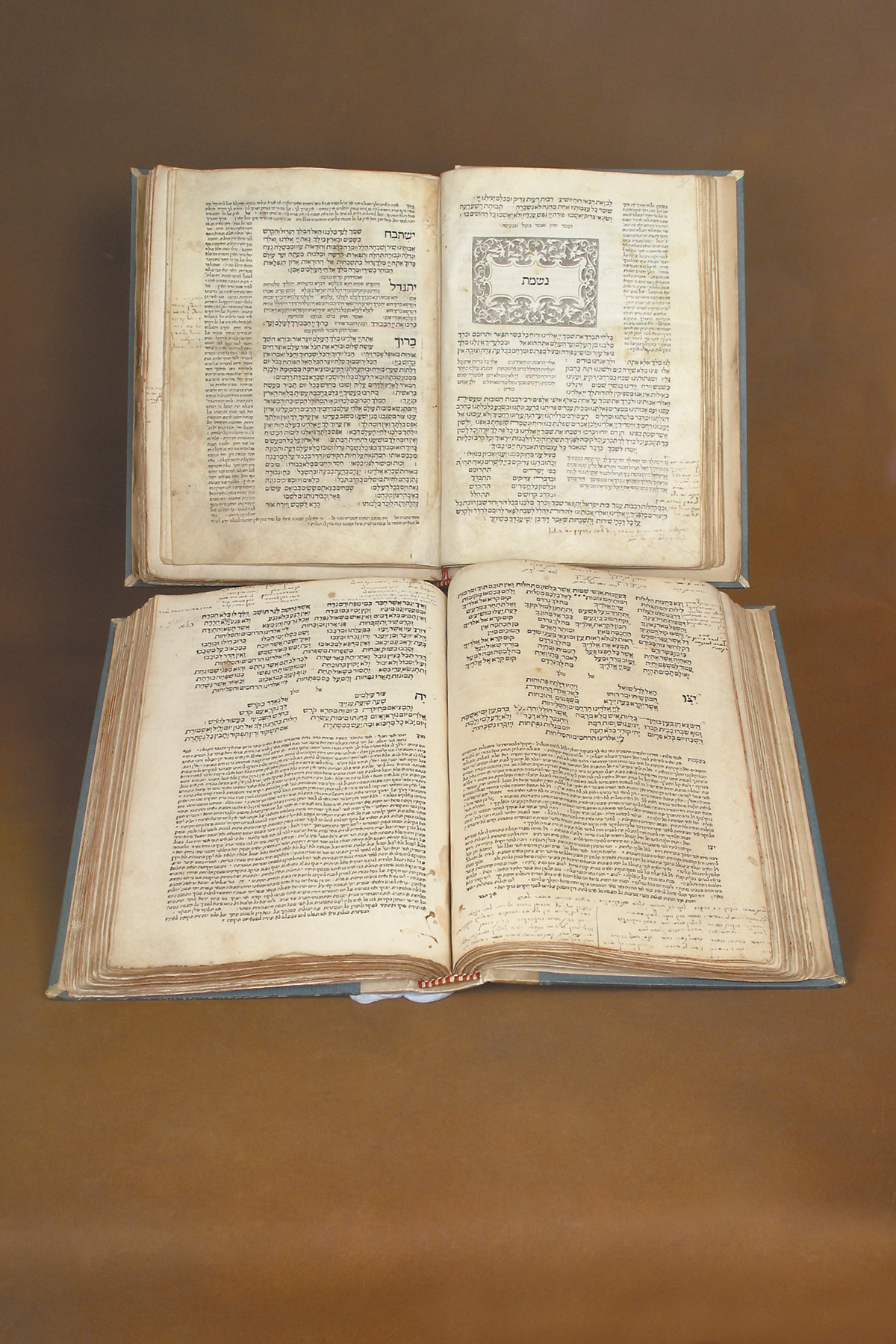
Auction 20 · Lot 26
Machzor Kephi Minhag Roma. According to Italian rite. With Kimcha De’avishona by Yochanan Treves, and commentaries by Ovadiah Sforno and Maimonides. Includes the Ethics of the Fathers
- Estimate
- $25,000–$30,000
- Hammer price
- $31,000
Historical auction record. Hammer prices exclude buyer’s premium and taxes.
author
(LITURGY)
printer
Menachem ben Abraham of Modena & Partners
Place
Bologna
Publication
1540-1
Description
FIRST EDITION. Two parts in two volumes. Titles within elaborate frames, many initial letters within cartouches. PRINTED ON VELLUM AND PAPER
references
Vinograd, Bologna 16; Y.Y. Cohen, no. 7; Adams J-200
summary
* TEXT: Prayers for the entire year, including Passover Hagadah, Ethics of the Fathers, the Books of Canticles, Ruth, Lamentations, Jonah and Ecclesiastes. Also laws relating to birth, family purity, marriage, burial, etc. Includes the first edition of Treves’ commentary elucidating the subject matter of the prayers and the meaning and derivation of phrases.
A few copies of this work contain an interesting bibliographical curiosity. Upset that R. Yochanan Treves’s commentary, Kimcha De’avishona was left unattributed on the title-page, his students gathered as many copies as they could and overstamped a note on the front flyleaf affirming the author of the commentary was indeed their master, Yochanan Treves.
In a bibliographical note to his Catalogue of the Hebrew Union College Library (unpublished) Moses A. Marx provides a census of those copies of this work in the major collections that existed on paper, vellum or part vellum. Apparently, vellum copies were printed to order.
* Marginal Glosses: This copy with extensive, important scholarly marginal notes, especially in Volume I, in various Italian hands. The notes pertain to the nusach, the correct nikud, textual corrections and additions as well as halachic notes and kavanoth, plus instructions to the Cantor.
The writer cites a wide variety of scholarly works to buttress his opinions. For example he cites; Rabeinu Yonah and Asarah Ma’amaroth (f.4v); Zohar (f.12v); Likutei Dinim, apparently a manuscript, (f.19v); Kenaf Renanim (f.16v); Chikur Din, Sepher Chareidim (f.17v); Tosphoth Yom Tov Beer Sheva (f.18v); Beth Yoseph (f.16v).
The writer was a self-confident Rabbi and scholar, as is evidenced from his comment on f.198r, concerning the Roman custom on Tisha b’Av, not to put the Torah Scroll on a table on this melancholy day, rather, one of the congregants cradles it in his arms at the side, far away from the “duchan” for since the Nation of Israel is in exile - so too the Shechinah and the Torah are cast in exile. The writer in a marginal note , on f.198r, cites R. Jacob Israel Finzi as being vehemently opposed to this custom. The writer states; “I have chosen to defend this custom based upon a passage in the Tractate Sofrim...”
Most of the notes in the present Machzor are written in a typical 18th-century Italian Hebrew script. Owners signature “Moshe me’Padua” on title in a different, larger hand than the marginal notes.
It seems to have been customary, especially for Italian scholars, to write additional comments in the margins of the Machzorim used in their Congregations. In recent times a facsimile edition of the kabbalistic marginal notes of one of the most famous scholars hailing from Padua, R. Moshe Chaim Luzzato (RaMCHa”L) was published with scholarly notes and an introduction by Y. Avivi of Jerusalem.
Vol. I: ff. (200). ff. 1-40,105-116, 141-200 PRINTED ON VELLUM. Title trimmed, lightly stained, neat inner-marginal repair, trace wormed, previous owner’s signatures on verso of title and first leaf, censored in places, extensive marginal glosses in a sixteenth-century hand.
Vol. II: ff. (189). Few light stains in places, paper repairs to ff. 38,67&70 slightly affecting a few words, occasional marginal glosses, censored in places. Signed by censors; “Dominico Irosolimitano 1599” and “Fra. Luigi da Bologna, 1597” on verso of penultimate leaf and “Laurentium Fraguellum,” “Giovanni Dominico Carretto, 1628” and “Antonio Francesco EnriquesArciu’ d’Urbino, 1688” on verso of final leaf. Recent uniform vellum-backed boards. Folio
Enquire about this lot