
Auction 43 · Lot 44
(AMSTERDAM)
- Estimate
- $3,000–$4,000
- Hammer price
- Not recorded
Historical auction record. Hammer prices exclude buyer’s premium and taxes.
Description
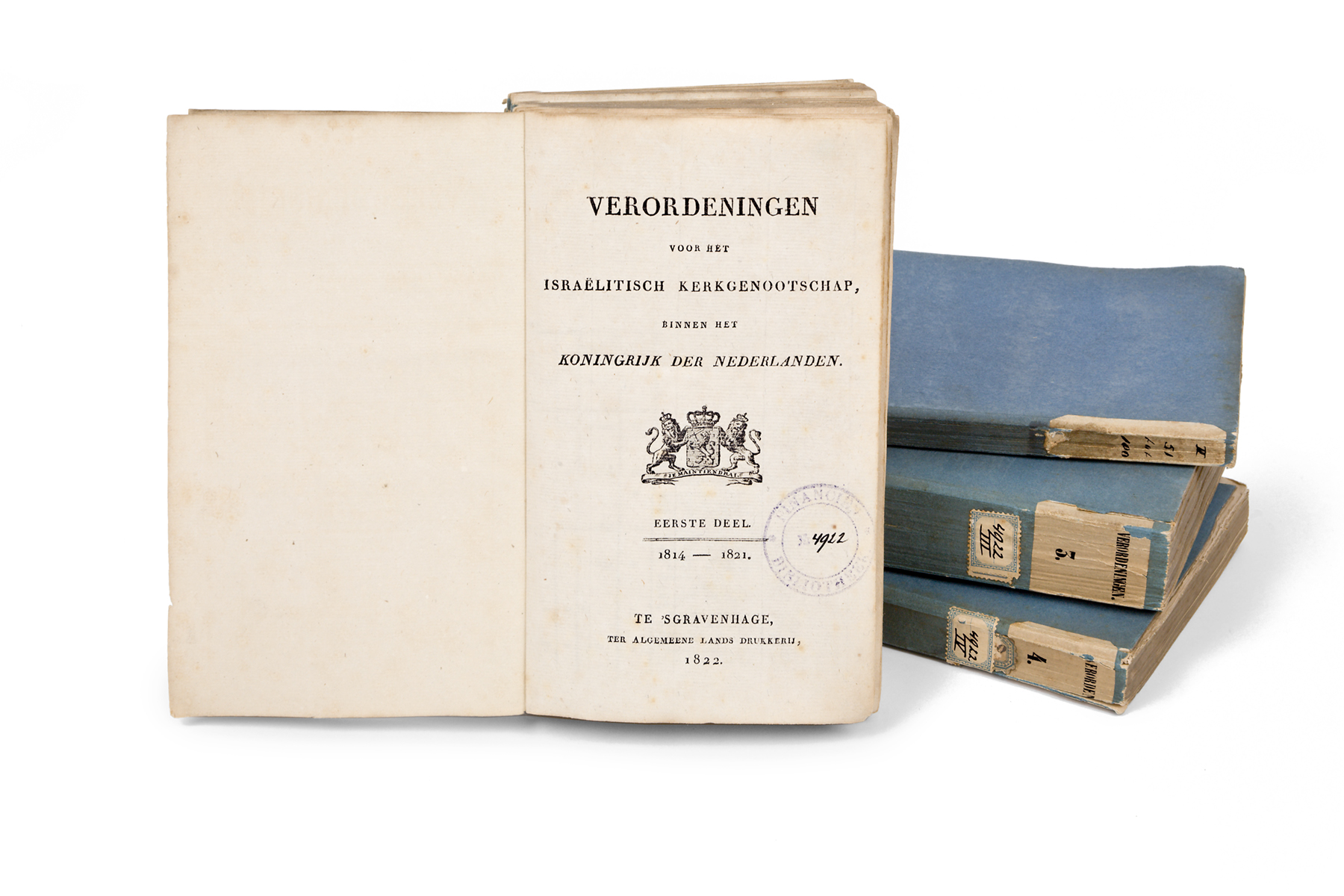
Verordeningen voor het Israelitisch kerkgenootschap binnen het koningrijk der Nederlanden [“Regulations of the Jewish Community within the Kingdom of Netherlands.”]
Vol. I (1814-1821) (Te 'sGravenhage: Ter Algemeene Lands Drukkerij, 1822). * Vol. II (1822-1829) (Te 'sGravenhage: Ter Algemeene Lands Drukkerij, 1830). * Vol. III (1829-1840) (Te 'sGravenhage: Ter Algemeene Lands Drukkerij, 1842). * Vol. IV (1840-1868) (Te 'sGravenhage, 1869?) Dutch State Coat-of-Arms on title, with motto "Je maintiendrai."
references
Freimann, p. 292
summary
After the defeat of Napoleon at Waterloo, French rule of the Netherlands drew to a close. No sooner did King William I (formerly Prince of Orange-Nassau) ascend to the throne of the United Netherlands, he set about organizing the Jewish community. On June 12, 1814 a regulation was issued providing for twelve Hoofd-Synagogen (main synagogues) to be distributed as follows: In Amsterdam, one Sephardic ("Portugeesche" or Portuguese) and one Aschkenazic ("Hoog-duitsche" or German); the same for Den Haag; and one each for Rotterdam, Amersfoort, Middelburg, den Bosch, Nijmegen, Zwolle, Leeuwarden and Groningen (Article 1). This regulation determined the powers of the chief rabbis, as well as those of the parnassim and manhigim (lay leaders); and addressed the mode of elections, marriages and relief to the poor. Neither did William I neglect the area of education: Teachers without diplomas and foreign rabbis were prevented from taking office (Art. 29), and medals were promised for the best school texts and sermons in Dutch (in an effort to discontinue the use of Yiddish in instruction). See Verordeningen, Vol. I, No. III, pp. 1-58.
When in 1840 William I abdicated, he was succeeded by his son William II. At the latter's behest, a resolution was passed on May 30, 1845 giving the widows of chief rabbis (Opperrabbijnen) the same benefits as the widows of Protestant clergy. See Verordeningen, Vol. IV, No. 10.
Vol. IV missing title, otherwise complete. Uniform contemporary boards, chipped, Vol. I, front board detached. 4to
Enquire about this lot